

Onychocryptosis (ingrown toenail)
Ingrown toenails
A painful, swollen, often infected nail edge, usually on the big toe. Corrected with a small procedure under local anaesthetic.
What is happening inside your body
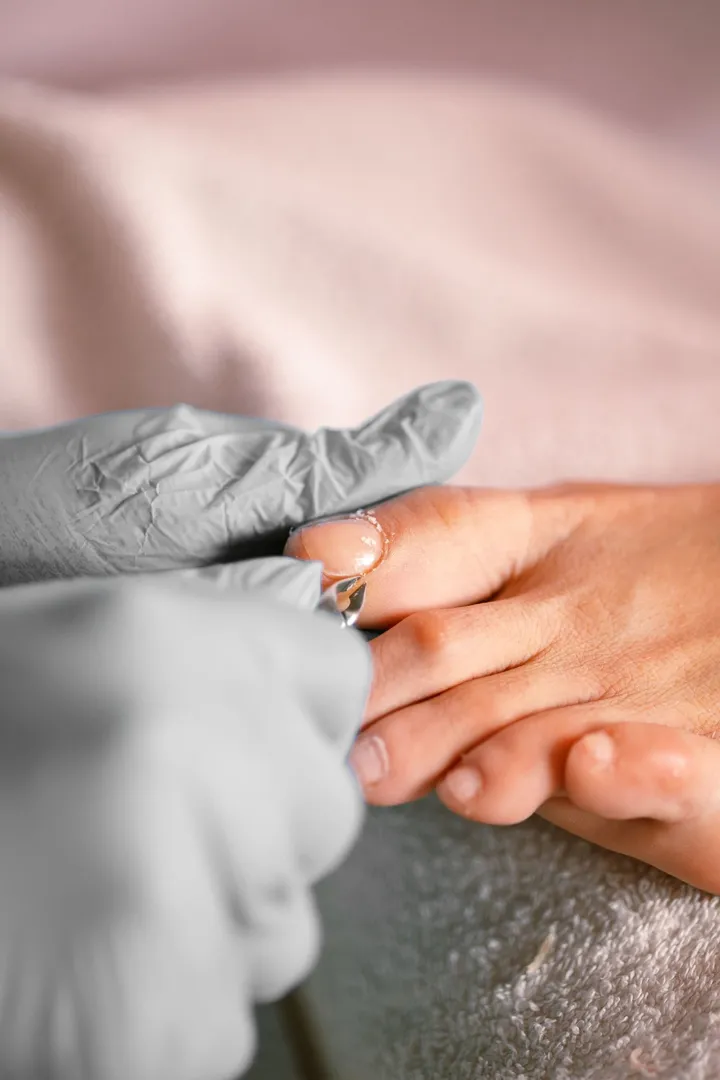
An ingrown toenail happens when the edge or corner of the nail grows into the surrounding skin instead of over it. The skin reacts by becoming red, swollen and painful, and it can become infected, especially if it is cut too short or squeezed by tight shoes. Left alone, it tends to keep coming back and can spread infection into the toe.
An ingrown toenail is a small problem that causes disproportionate pain, and it is corrected quickly and simply in clinic.
Signs to look out for
- Pain along one edge of a toenail, usually the big toe
- Redness and swelling of the skin next to the nail
- Pus or fluid draining from the side of the nail
- A toe that is tender to touch or painful in closed shoes
- The same toenail becoming ingrown again and again
How it is treated
For a mild case, soaking the foot, wearing wider shoes and correct nail trimming can be enough. For a persistent or infected nail, Dr. Sajjad removes the ingrown edge of the nail under local anaesthetic, a quick procedure done in clinic. To stop it growing back, the nail edge's root can be treated with a chemical (phenolisation) so that strip of nail does not regrow. Antibiotics are added if there is infection.
What recovery looks like
-
Same day: you walk out in normal footwear, with the toe numb for a few hours.
-
First few days: the toe is kept clean and dressed, with mild pain managed by simple pain medicine.
-
One to two weeks: the toe heals and any redness settles.
-
Most patients do not have that nail edge become ingrown again.
Common questions
Does removing the ingrown part of the nail hurt?
The toe is numbed with a local injection first, so the procedure itself is not painful. There may be mild soreness for a day or two afterwards, managed with simple pain medicine.
Will the ingrown nail come back after treatment?
When the nail root is treated with the phenol technique, that edge of the nail usually does not regrow, which prevents the problem coming back. Simple trimming alone has a higher chance of recurrence.
Should I wait to see if it settles on its own?
A mild case can sometimes settle with soaking and proper footwear. If it is painful, swollen or discharging, it is best seen soon, as infection can spread into the toe if it is left.
This page is for general information only and does not replace a proper medical examination.