

Thoracic outlet syndrome (vascular type)
Thoracic outlet syndrome
Arm pain, swelling or a cold hand from a squeezed blood vessel near the collarbone. Assessed with scans and relieved surgically when needed.
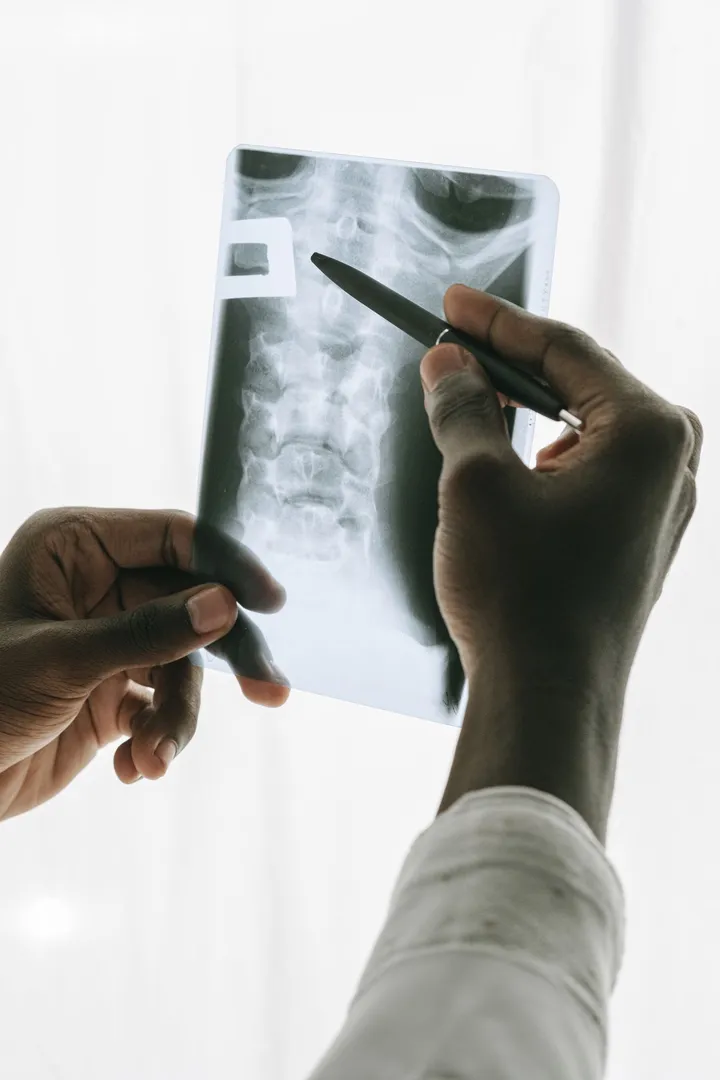
What is happening inside your body
The blood vessels and nerves travelling to your arm pass through a narrow gap between your collarbone and your first rib. In some people this gap is naturally tight, or made tighter by an extra rib or tight muscle, and it squeezes what passes through. When it squeezes a vein, the arm can swell and turn a bluish colour. When it squeezes an artery, the hand can turn cold and pale, especially when the arm is raised. This is called thoracic outlet syndrome.
A swollen, aching or cold arm that comes on with activity can be a squeezed blood vessel near the collarbone. Seen and scanned early, it can be treated before it causes a clot.
Signs to look out for
- Arm or hand swelling that comes on with activity, especially overhead movement
- A heavy, aching or tired arm that gets worse with repeated overhead work
- A hand or fingers turning pale, cold or bluish, especially with the arm raised
- Visible swollen veins across the shoulder or upper arm
- In more serious cases, a sudden painful swollen arm from a clot in the vein
How it is treated
Assessment usually includes an ultrasound scan of the vessels, sometimes with the arm placed in different positions to see where the squeezing happens. When a vein is affected, blood thinning medicine treats any clot, and Dr. Sajjad may recommend an operation to remove the first rib or release the tight structures so the vein is no longer squeezed. When an artery is affected, similar decompression surgery relieves the pressure and protects the arm's blood supply. He will explain honestly which parts of this problem are surgical and which are not.
What recovery looks like
-
First few days: a hospital stay while the arm and wound are monitored.
-
First weeks: some shoulder stiffness is normal, and gentle movement is encouraged as advised.
-
Weeks to months: physiotherapy helps the shoulder regain full movement and strength.
-
Follow-up scans confirm the vessel is flowing freely again.
Common questions
Is thoracic outlet syndrome always a vascular problem?
No. Most cases affect the nerves and are managed with physiotherapy rather than surgery. Dr. Sajjad, as a vascular surgeon, sees the smaller group of cases where a vein or artery is being squeezed, which needs a different assessment and, sometimes, an operation.
Why does my arm swell only during certain activities?
If a vein is being squeezed near the collarbone, raising the arm or repeated overhead activity narrows the gap further and blocks drainage, causing the swelling. Resting the arm usually eases it, but the underlying squeeze needs to be assessed.
Is the operation for thoracic outlet syndrome a major one?
It is a proper operation, usually done under anaesthesia with a hospital stay, and like any surgery it carries risk. Dr. Sajjad will explain the risks and benefits clearly with you before you agree to it.
This page is for general information only and does not replace a proper medical examination.